WordPress vs Next.js in 2026: The Complete Comparison
WordPress powers 43% of the web. Next.js is the fastest-growing framework among professional development teams. If you're deciding between the two for a new project — or considering migrating from WordPress to Next.js — this comparison covers every factor that matters: performance, SEO, security, cost, and maintainability.
Performance: Next.js Wins Decisively
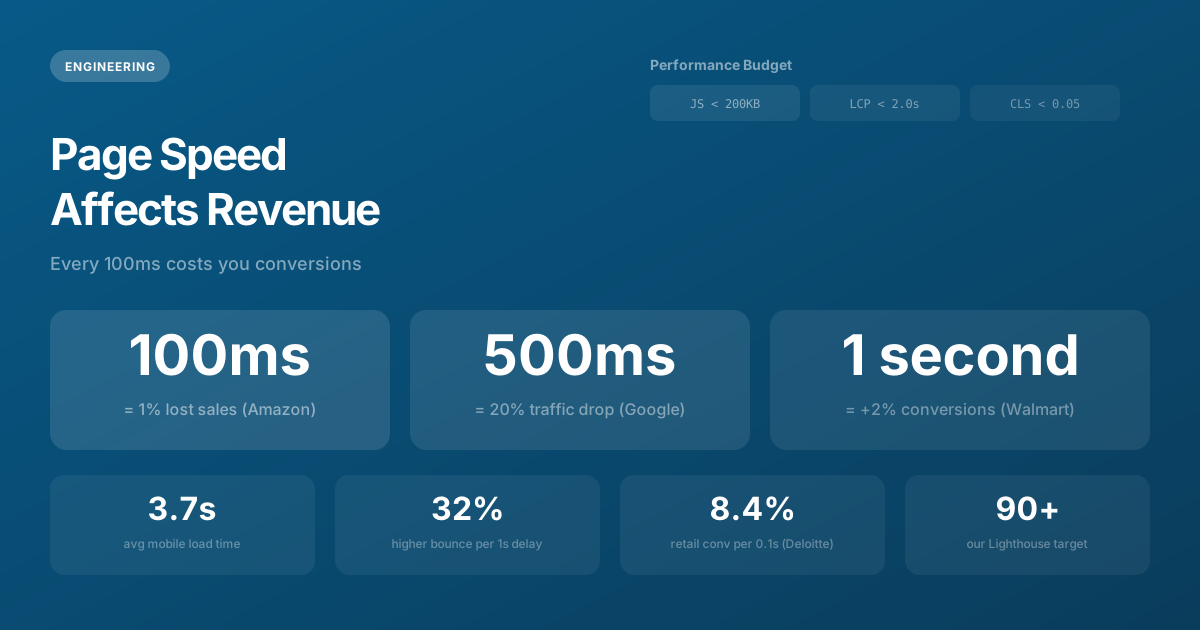
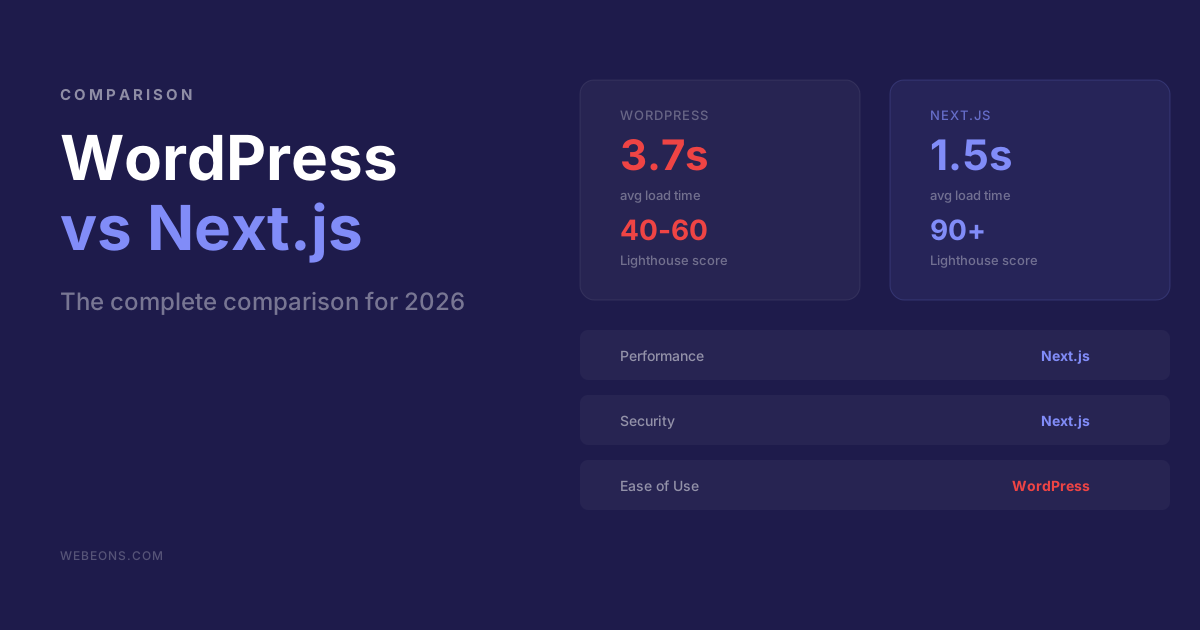
The average WordPress site loads in 3.7 seconds on mobile. The average Next.js site loads in under 1.5 seconds. This isn't a marginal difference — it's the gap between a site that passes Core Web Vitals and one that fails. WordPress's performance problem isn't WordPress itself — it's the architecture. Every page request hits a PHP server, queries a MySQL database, executes 20-40 plugin hooks, assembles the HTML, and sends it to the browser. Caching plugins help, but they're bandaids on an architectural limitation.
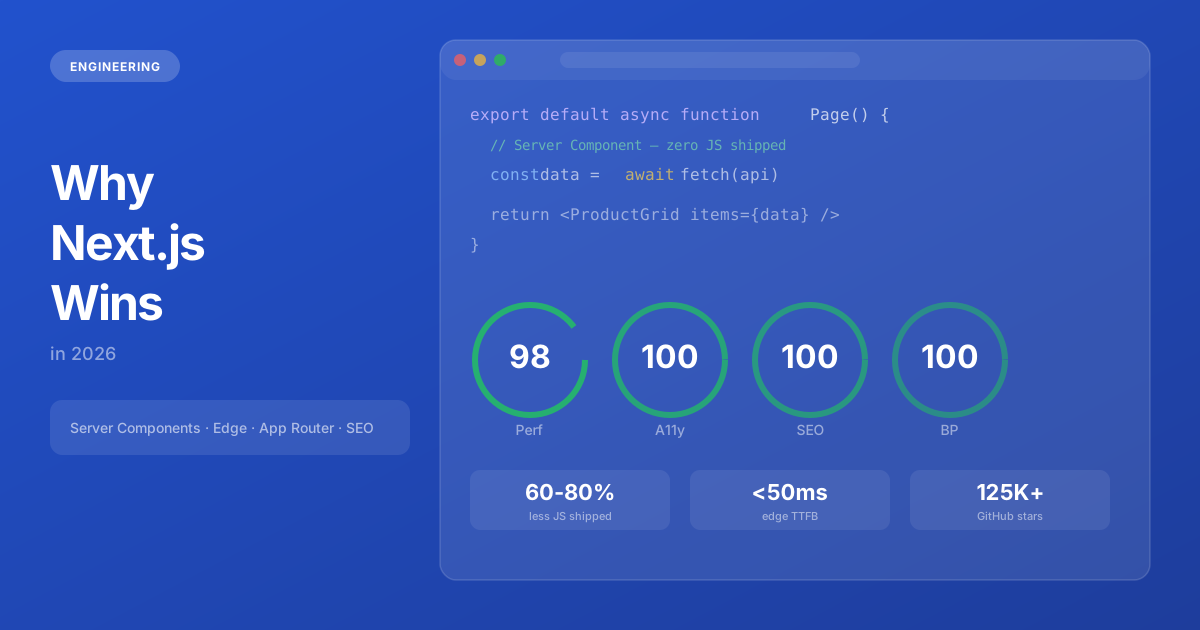
Next.js pre-renders pages at build time or on the server's edge network, delivering static HTML that loads near-instantly from a global CDN. There's no database query, no PHP execution, and no plugin overhead on each request. The performance difference is structural, not incremental.
SEO: Next.js Has the Edge
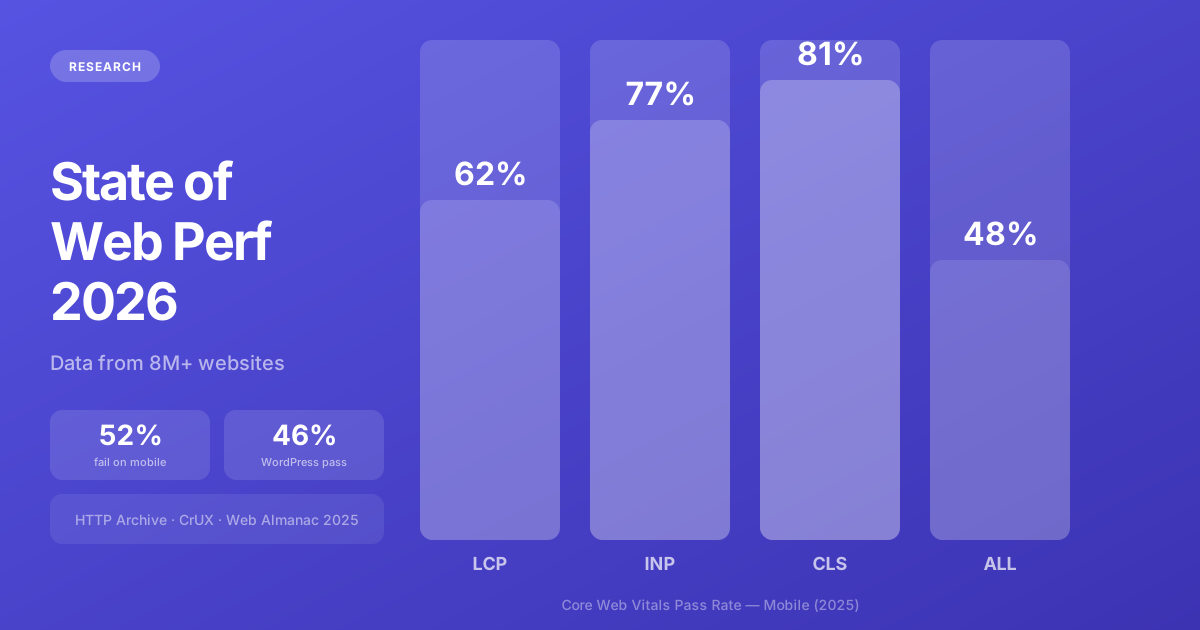
WordPress has excellent SEO plugins (Yoast, RankMath), but SEO in 2026 is increasingly about technical performance. Google's Core Web Vitals directly affect rankings, and technical SEO goes far beyond meta tags. Next.js delivers faster Largest Contentful Paint, lower Cumulative Layout Shift, and better Interaction to Next Paint scores — all three Core Web Vitals metrics that WordPress sites commonly fail.
Next.js also supports structured data (JSON-LD), dynamic sitemaps, and server-side rendering out of the box — without plugins. Every SEO feature is code-level, version-controlled, and predictable. No plugin conflicts, no database-stored SEO settings that vanish during updates.
Security: Next.js Is Inherently Safer
WordPress is the most attacked CMS in the world. In 2025, over 90,000 attacks per minute targeted WordPress sites — primarily through plugin vulnerabilities, brute-force login attempts, and SQL injection. The attack surface is enormous: a typical WordPress site runs 20-30 plugins, each one a potential entry point.
Next.js sites deployed on Vercel or similar platforms have no exposed admin panel, no PHP, no public database endpoint, and no plugin ecosystem to exploit. The attack surface is near-zero by design. You can't brute-force a login page that doesn't exist.
Content Management: WordPress Is Easier (Initially)
WordPress's greatest strength is its admin panel. Anyone can log in, click "Add New Post," write content, and publish. No developer needed. For blogs, news sites, and content-heavy organizations, this matters enormously.
Next.js requires a headless CMS for non-technical content editing — Sanity, Contentful, or Strapi are the most common choices. These tools provide visual editors, preview modes, and publishing workflows that match or exceed WordPress's editing experience. The difference is they require initial setup by a developer. Once configured, content teams can update text, images, and pages with the same ease as WordPress — often with a better interface and real-time preview of how changes will appear on the live site.
Cost Comparison
WordPress appears cheaper upfront: free software, $5/month hosting, $50 for a premium theme. But the total cost of ownership tells a different story. Factor in premium plugins ($200-500/year), managed WordPress hosting for acceptable performance ($30-100/month), a developer on retainer for plugin conflicts and updates ($500-2,000/month), and security monitoring ($20-50/month). The "cheap" WordPress site costs $5,000-15,000/year to maintain properly.
A Next.js site costs more upfront ($8,000-25,000 for development) but runs on Vercel's free or $20/month plan, requires zero plugin subscriptions, needs no security monitoring beyond what the platform provides, and only needs developer time for feature additions — not maintenance. Over 3 years, the total cost is often lower than WordPress.
When WordPress Still Makes Sense
WordPress is the right choice when non-technical users need to publish content daily without any developer involvement, when the budget is under $3,000, when the site is primarily a blog with minimal custom functionality, or when there's an existing WordPress ecosystem (plugins, themes, team expertise) that would be expensive to replace.
When Next.js Is the Clear Winner
Next.js is the right choice when performance directly affects revenue (e-commerce, SaaS, lead generation), when SEO is a primary growth channel, when security is non-negotiable (finance, healthcare, enterprise), when the site includes custom interactive features beyond content display, or when the site will scale to high traffic volumes. If you're building a startup MVP or aSaaS product, Next.js is the only serious option.
The Migration Path
If you're on WordPress and experiencing performance issues, security concerns, or scaling limitations, migrating to Next.js is a well-defined process. We migrate WordPress sites to Next.js with full SEO preservation — comprehensive 301 redirects, metadata migration, and Google Search Console monitoring. Most clients see rankings improve within 4-6 weeks as Core Web Vitals scores jump from the 40-60 range to 90+.
Bottom Line
WordPress democratized the web. It gave everyone the ability to publish. But in 2026, the bar has risen. Users expect sub-2-second load times, Google rewards Core Web Vitals compliance, and security breaches cost businesses an average of $4.45 million. Next.js meets these standards by default. WordPress requires constant effort and expense to approach them. Choose based on where your site needs to be in 3 years, not where it is today.
Need help with this?
We build exactly what this article describes — production-grade digital products for ambitious companies.
Start a Project →