How to Get Cited by ChatGPT and Google's AI Answers: What the Evidence Supports
There is no secret file or tag. Here is what research says influences AI citations, the crawler checks most sites skip, what to ignore, and a scorecard that names your first fix.
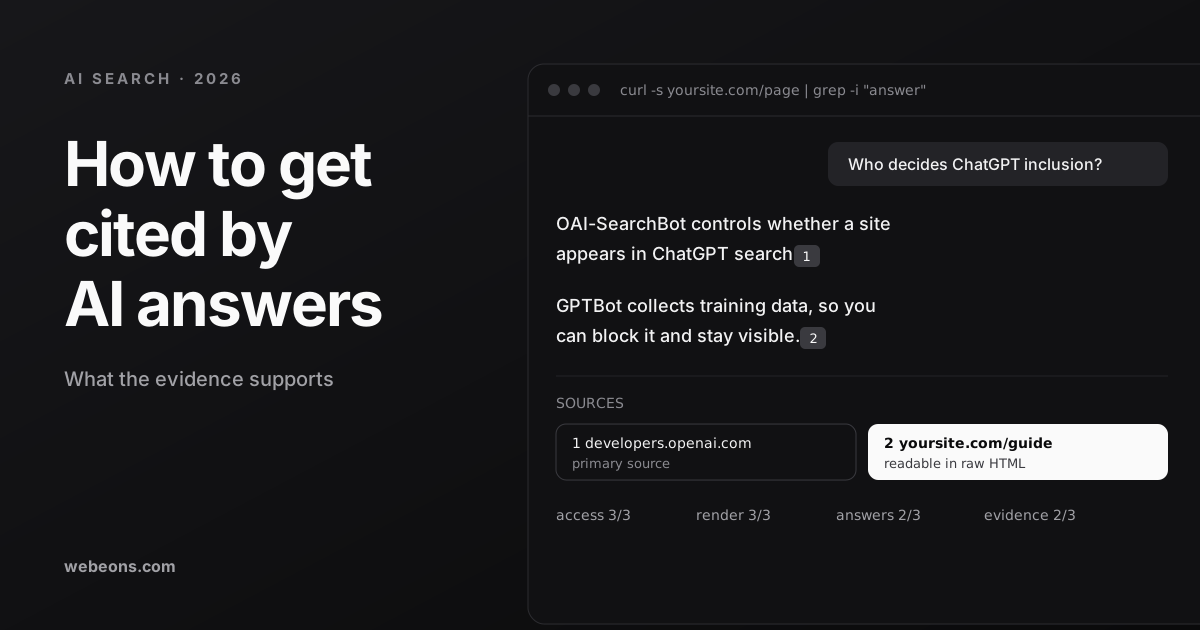
To get cited by ChatGPT and Google's AI answers, three things have to be true: AI systems can read your pages, your pages state clear and sourced answers, and other sites talk about you. A new industry is selling ways to "rank in ChatGPT", and some of that advice is sound while a lot of it is guesswork. This guide separates what has evidence behind it from what does not, and sets out what we would do first on a real website.
Why This Matters Now
Treat that as a rough guide. Long-term comparisons are imperfect, because SparkToro's earlier figures came from different panels, and the data leaves out searches in the Google mobile app. It also found that AI Mode itself was only 0.34% of searches in that period, so AI Mode is not the main cause.
AI Overviews are a bigger factor. Ahrefs found that on December 2025 data, the presence of an AI Overview went with a 58% lower click-through rate for the top-ranking page, up from 34.5% in its April 2025 study. If fewer people click, being named inside the answer matters more.
What Google Says
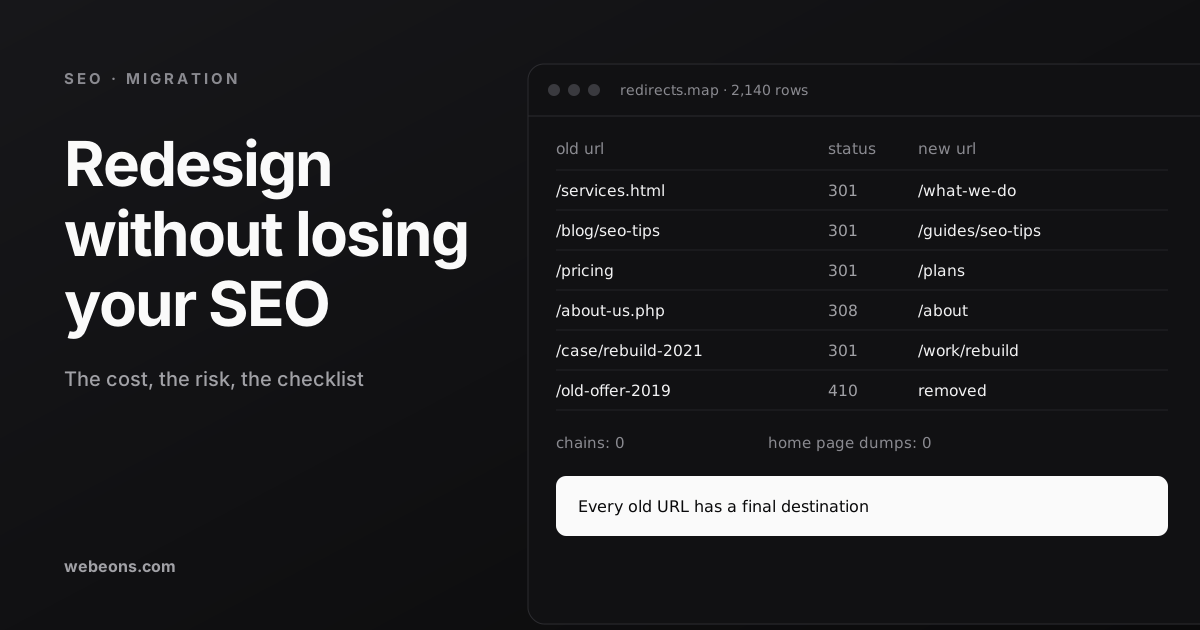
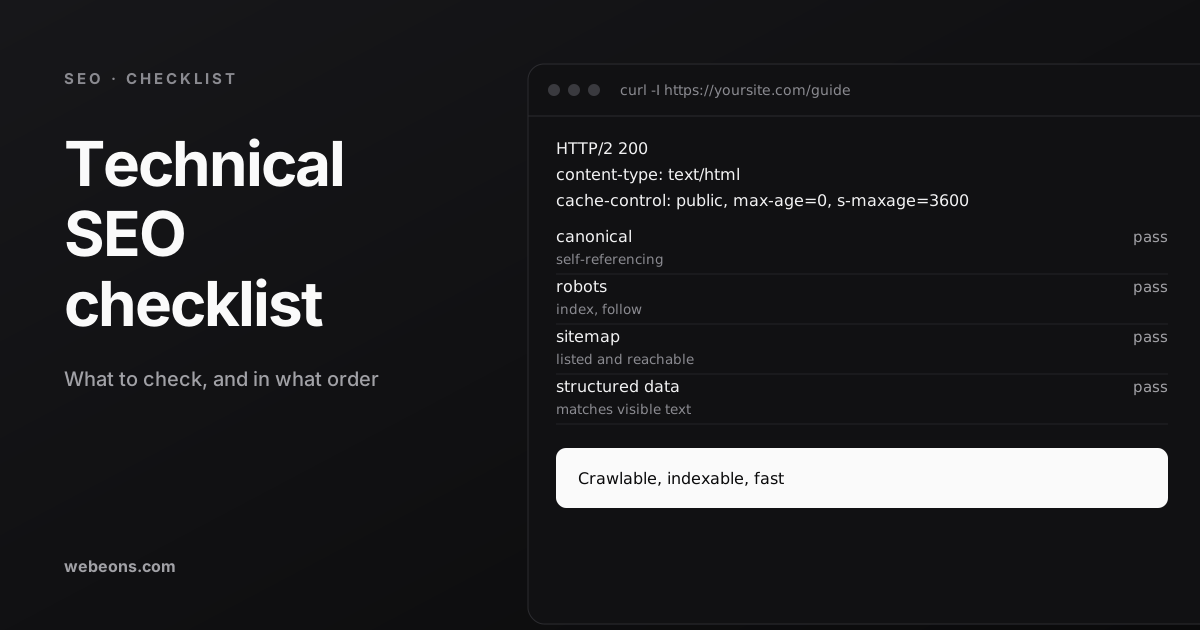
Google's guidance is plain: "There are no additional requirements to appear in AI Overviews or AI Mode, nor other special optimizations necessary." You do not need new machine-readable files, AI text files or special schema markup. Normal SEO still applies: allow crawling, use internal links and keep important content in text form. If you have the basics in place, our technical SEO checklist covers most of what Google is asking for.
One detail is worth knowing. Google says these features may use "query fan-out", issuing multiple related searches across subtopics and data sources while building a response. So a page can be pulled in for a sub-question even if it never ranked for the original query. That favors pages that answer specific questions well over thin pages that repeat a keyword.
What the Research Supports
Mentions correlate more strongly than backlinks
Ahrefs studied 75,000 brands and how often they appeared in AI answers. The strongest factors were signs that people talk about the brand, and classic authority scores came last.
AI Mode and AI Overviews show the same order: web mentions at 0.709 and 0.656, Domain Rating at 0.285 and 0.326. Ahrefs' own caveat applies, because correlation is not causation. Big brands get mentioned everywhere, and they also get cited. Still, the practical advice is sensible: earn real mentions on sites and channels your buyers already use.
Sources, statistics and quotes help
The best academic work here is the GEO paper from Princeton and collaborators, accepted at KDD 2024. The authors rewrote web content in different ways and measured visibility in generative answers. Adding citations to credible sources, relevant statistics and quotations gave relative improvements of 30–40% on their main visibility metric. Keyword stuffing, the old SEO habit, did not perform well.
Note the limits. These were controlled tests on a research engine and on Perplexity, and they did not test ChatGPT as it works today. It is a good reason to write this way, and writing this way also makes pages more useful to people. It does not guarantee a 40% lift.
In practice this changes how a paragraph reads. "We offer competitive pricing tailored to your needs" gives an AI system nothing to quote. "Our custom AI chatbot builds are listed at $15,000–$40,000" gives it a subject, a claim and a number. We publish our own price ranges for that reason, and for a simpler one: buyers want them too.
The llms.txt file has no proven effect
The llms.txt idea is a text file that summarizes your site for AI systems. SE Ranking checked about 300,000 domains, of which about 10% had the file, and found no relationship between having it and how often a domain was cited. Removing it from their model improved accuracy. Its own conclusion was careful: the file "doesn't seem to directly impact AI citation frequency. At least not yet." Google's guidance says AI text files are not required. The file does little harm, but do not pay for it or expect anything from it.
The Step Most Sites Skip: Can AI Read Your Pages?
This is where an engineering problem blocks everything else. Vercel and MERJ studied crawler behavior and reported in December 2024 that these crawlers split into two groups.
| Runs JavaScript | Did not run JavaScript |
|---|---|
| Gemini, through Googlebot's infrastructure | OAI-SearchBot, ChatGPT-User, GPTBot |
| AppleBot | ClaudeBot, PerplexityBot |
| Meta-ExternalAgent, Bytespider, CCBot |
You can test your own site in a minute:
# Fetch the raw HTML, as a non-rendering crawler sees it
curl -s https://yoursite.com/your-page | grep -i "a sentence from your page"
If nothing comes back, your content only exists after JavaScript runs. Single-page apps are the usual cause, and that includes many sites built with AI app builders. Google may still see the page, while other AI systems may see an empty shell. Server-side rendering or static generation fixes it, and that is standard in frameworks like Next.js. It is an hour of checking that decides whether any content work can pay off, which is why we do it first.
Next, check your robots.txt, because the crawlers do different jobs. OpenAI's documentation separates them:
- OAI-SearchBot surfaces websites in ChatGPT's search features. Sites that opt out will not appear in its search answers, though they can still show up as navigational links.
- GPTBot crawls content that may be used to train models. Blocking it does not affect search, so you can opt out of training and stay visible.
- ChatGPT-User handles user-initiated visits. OpenAI says
robots.txtmay not apply to it, and it does not decide search inclusion.
# robots.txt: stay in ChatGPT search, opt out of model training
User-agent: OAI-SearchBot
Allow: /

User-agent: GPTBot
Disallow: /
OpenAI says robots.txt changes can take about 24 hours to apply to search. Also check your firewall. CDN bot protection can block these crawlers even when robots.txt allows them, and your server logs will show it. OpenAI publishes its crawler IP ranges, so you can allow them precisely.
Score Your Site
Tick what you have checked, not what you assume. The order matters: the first fix is the first open item, so access and rendering come before content, because good writing cannot help a page that no crawler can read. The score is a checklist total and predicts nothing about rankings or citations.
A Plan, in Order
- Fix access. Run the raw HTML test on your key pages. Check
robots.txtand firewall rules for each crawler. - Find the questions buyers ask. Use your sales calls, support tickets and Search Console queries, not a keyword list alone.
- Answer first. Put a clear, self-contained answer directly under each heading. Use real headings and tables rather than images of text.
- Show your evidence. Cite primary sources, use specific numbers, and date your data. Publish facts nobody else has where you can, such as your real prices or your own measurements.
- Earn mentions. Get into the comparison articles, directories, podcasts, YouTube videos and communities your buyers trust.
- Measure what you can. Check Search Console's generative AI report, and add a "how did you hear about us" field to your contact form, because a lot of this influence never appears as a referral click.
What to Ignore
- Separate pages written only for AI. Google's guidance gives no support for them, and they split your content.
- Guaranteed ChatGPT rankings. Nobody can guarantee a citation. Treat that promise as a reason to walk away.
- Mass AI-written articles. The evidence above rewards sourced, specific content, and volume delivers neither.
Where This Is Heading
Three changes are already dated and public, and they make this work easier to measure and easier to control.
- Measurement has arrived, partly. Google introduced Search Console's generative AI reports in June 2026, and its help page says they reached all websites worldwide as of 31 August 2026. They show impressions by page, country, date and device. Search Engine Journal reported no click data at that point, and sites with few AI impressions may see no report at all.
- Site owners have a real control. Search Console now has a property-level setting to exclude a site from these surfaces, and Search Engine Journal reports that excluded sites get no traffic or impressions from them. Google says it is not a ranking signal elsewhere in Search. So taking part in AI answers has become a decision you can make per site.
- Attacks on these systems are growing. Google reported in April 2026 a 32% relative rise in malicious prompt injection content on the web between November 2025 and February 2026. Expect engines to get stricter about hidden text. If anyone sells you invisible instructions aimed at AI, read how prompt injection works and decline.
Where We Can Help
If your site is a JavaScript app that crawlers cannot read, or your content lives in a template that buries its answers, that is an engineering job. Our SEO and growth service handles the technical side, and our web development team can rebuild pages to render on the server. Send us your URL and we will tell you what is blocking you. Nobody can promise a citation, and neither do we. We can make sure nothing technical is standing in the way.
Sources (11)
Common questions
How do I get my website cited by ChatGPT?
Allow OAI-SearchBot in robots.txt and your firewall, make sure your content is in the raw HTML, state clear sourced answers under each heading, and earn mentions on sites your buyers use. Nobody can guarantee a citation.
Do I need an llms.txt file?
No. SE Ranking found no link between llms.txt and citation frequency across about 300,000 domains, and Google says AI text files are not required. It does little harm, but do not pay for it or expect anything from it.
Can I block AI training but still appear in ChatGPT search?
Yes. OpenAI's documentation says GPTBot and OAI-SearchBot are independent, so you can disallow GPTBot and still allow OAI-SearchBot to appear in search results.
Do AI crawlers run JavaScript?
In Vercel and MERJ's December 2024 study, OpenAI's crawlers, ClaudeBot and PerplexityBot did not, while Gemini and AppleBot did. Crawlers change, so run the raw HTML curl test on your own pages.
How can I measure AI search visibility?
Google says Search Console's generative AI report reached all websites worldwide as of 31 August 2026 and shows impressions by page, country, date and device. Sites with few AI impressions may not see a report. Add a how-did-you-hear field to your forms as well.
Find out what is keeping your site out of AI answers
Send us your URL. We will check whether crawlers can read your pages and tell you the first fix to make. We do not promise citations.